
Clicker training in five minutes a day
What a marker is, how to charge a clicker, and three first behaviours you can teach in short, five-minute sessions.
By the PackDay team. Checked against the sources listed at the end.
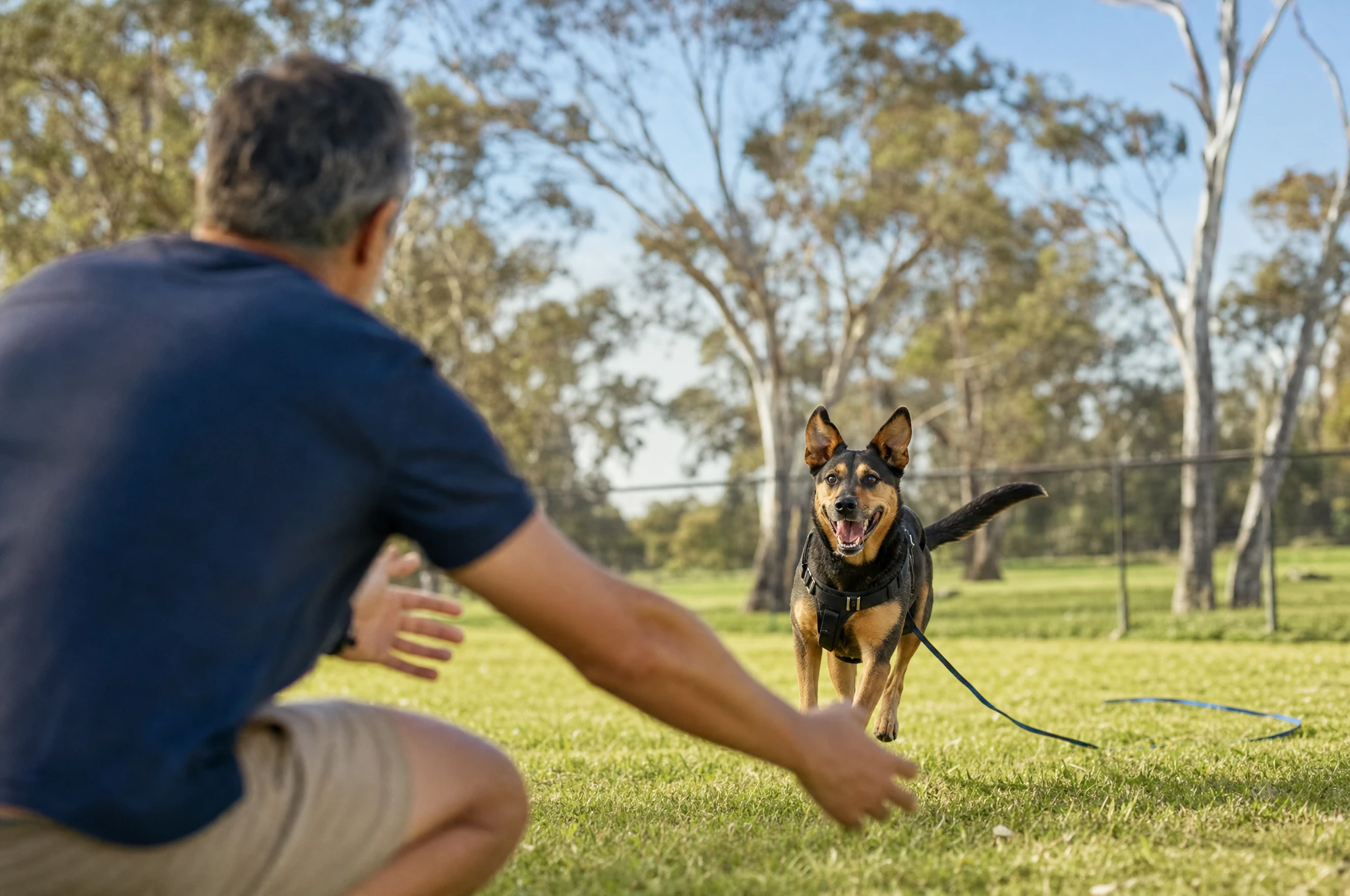
A dog who comes back when called gets more freedom and stays safer. Here’s how to build a recall in small steps, until it holds up at a busy park.
Most recall problems come from a few common patterns.
If “come” has a messy history, start again with a new cue. Dogs Trust suggests a short, distinctive word or a whistle, paired with a visual signal such as open arms. Everyone in your household should use the same one.
The BC SPCA notes a whistle carries well and sounds the same every time.
The RSPCA sums up the goal: be more exciting to your dog than whatever is out there.
Praise your dog as soon as they turn towards you. UC Davis advises rewarding as soon as the dog commits to coming. Then deliver the treat when they reach you.
Each stage should feel easy before you move on. If your dog fails twice in a row, go back a step.
The RSPCA recommends that your dog’s recall is at least 80 per cent reliable on a long line before you take it off.
| Stage | Move on when |
|---|---|
| Indoors | Your dog comes instantly, every time |
| Backyard | Your dog leaves a sniff to come to you |
| Long line, quiet area | Eight out of ten calls work first time |
| Quiet park | Your dog comes from across the space |
| Busier park | Your dog comes away from other dogs |
Your first week: days 1 to 3, five recalls indoors, twice a day. Days 4 and 5, five recalls in the backyard, twice a day. Days 6 and 7, one five-minute long-line session in a quiet dog exercise area. Use your best treats every time.
Protect your recall cue. Don’t use it for baths, nail trims, leaving the park or getting told off. For those, go and get your dog.
UC Davis notes that clipping the lead straight back on after every recall can feel like a punishment to your dog. At the park, call, reward, clip on, then let your dog go again a few times before you head home.
You don’t have to wait for your dog to wander off to practise. On walks, whenever your dog looks back at you without being asked, mark it with “yes” and give a treat.
AVSAB notes that dogs trained with rewards look towards their owners more often. The check-in game turns that into a habit on walks.
An emergency recall is a separate, special cue for the moments that really matter, such as a dog running towards a road. It needs to be different from your everyday cue, and you should use it rarely.
The BC SPCA describes a simple method:
The BC SPCA’s rule of thumb: if you wouldn’t bet $100 your dog will respond, don’t use the emergency cue yet.
As your dog improves, Battersea suggests letting the line trail, with the handle removed so it doesn’t snag.
Under section 31 of the WA Dog Act 1976, a dog in a public place must be held by a person capable of controlling it, or securely tethered for a temporary purpose, on a lead no longer than the prescribed length. Designated dog exercise areas, set by local councils, are an exception. Even there, section 32 requires your dog to be under the control of a competent person with a lead readily available.
The City of Perth and City of Stirling both say dogs in public places must be on a lead of no more than two metres, and can be off lead only in designated areas. The maximum fine for a breach of section 31 is $5,000.
In practice, that means your long-line and off-lead practice belongs in a designated dog exercise area or on private property. Boundaries and rules differ between councils, so check your council’s website for the areas near you.
Get help from a qualified trainer if your dog chases cars or wildlife, reacts strongly to other dogs, or progress has stalled.
Choose a reward-based trainer. AVSAB notes that recall is the most common reason owners turn to shock collars, and says a good trainer should avoid any tools that involve pain, such as choke chains, prong collars or electronic shock collars. In Australia, trainers certified by the Delta Institute commit to positive reinforcement, force-free methods, and you can search for one near you on Delta’s website. Pet Professional Guild Australia also has a directory of force-free professionals you can search by suburb.
In PackDay: log your practice walks and the app keeps your streak, so five minutes a day turns into a habit.
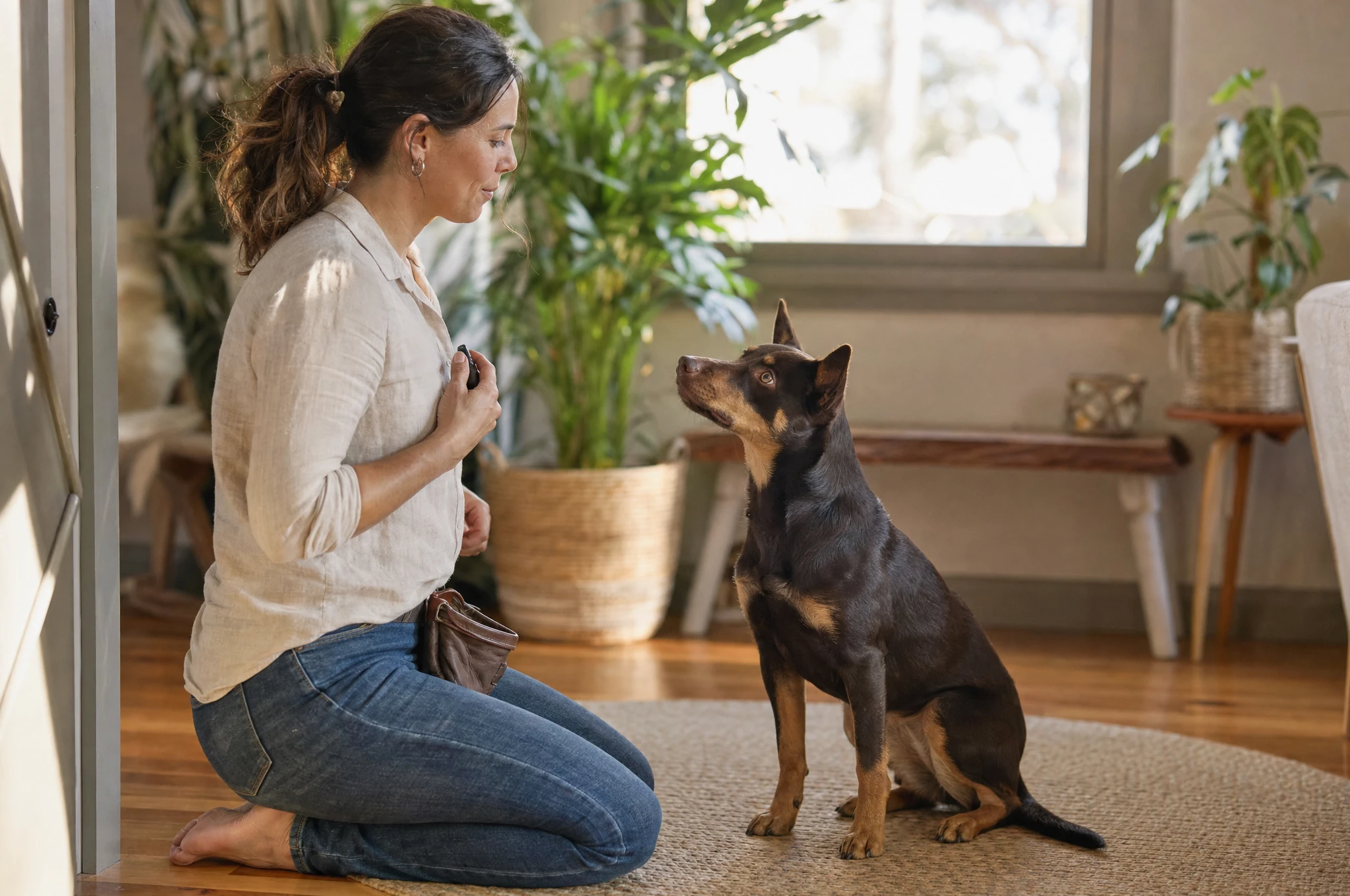
What a marker is, how to charge a clicker, and three first behaviours you can teach in short, five-minute sessions.
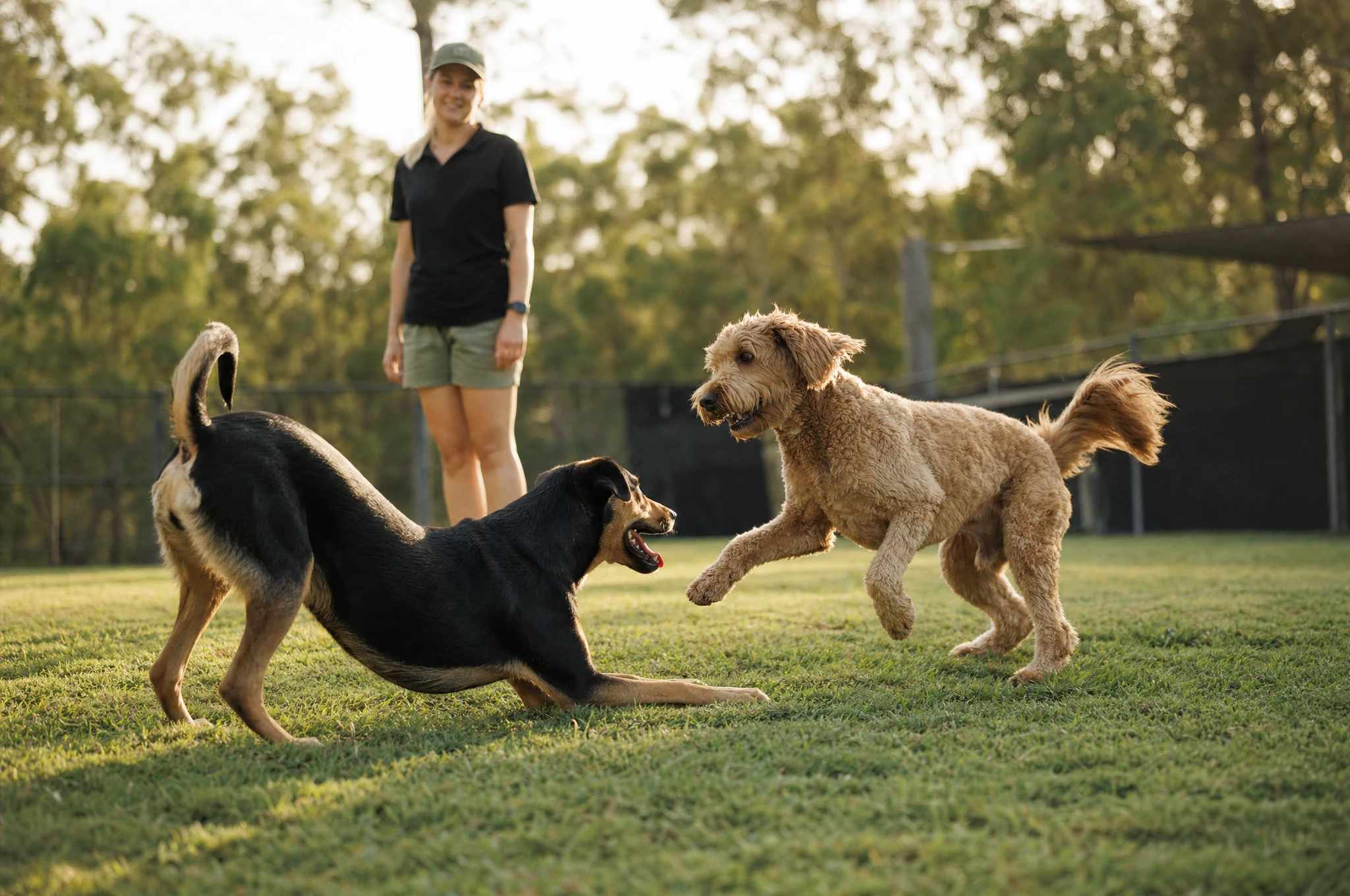
Learn to spot healthy play, early stress signals and the ladder of aggression, and how to step in calmly before play goes wrong.
A 30-day free trial when PackDay opens, no card. No booking fees, ever.