
Is your dog ready for daycare? A first-week checklist
How to tell if daycare suits your dog, what to sort out before day one, and what a good first week looks like.
By the PackDay team. Checked against the sources listed at the end.
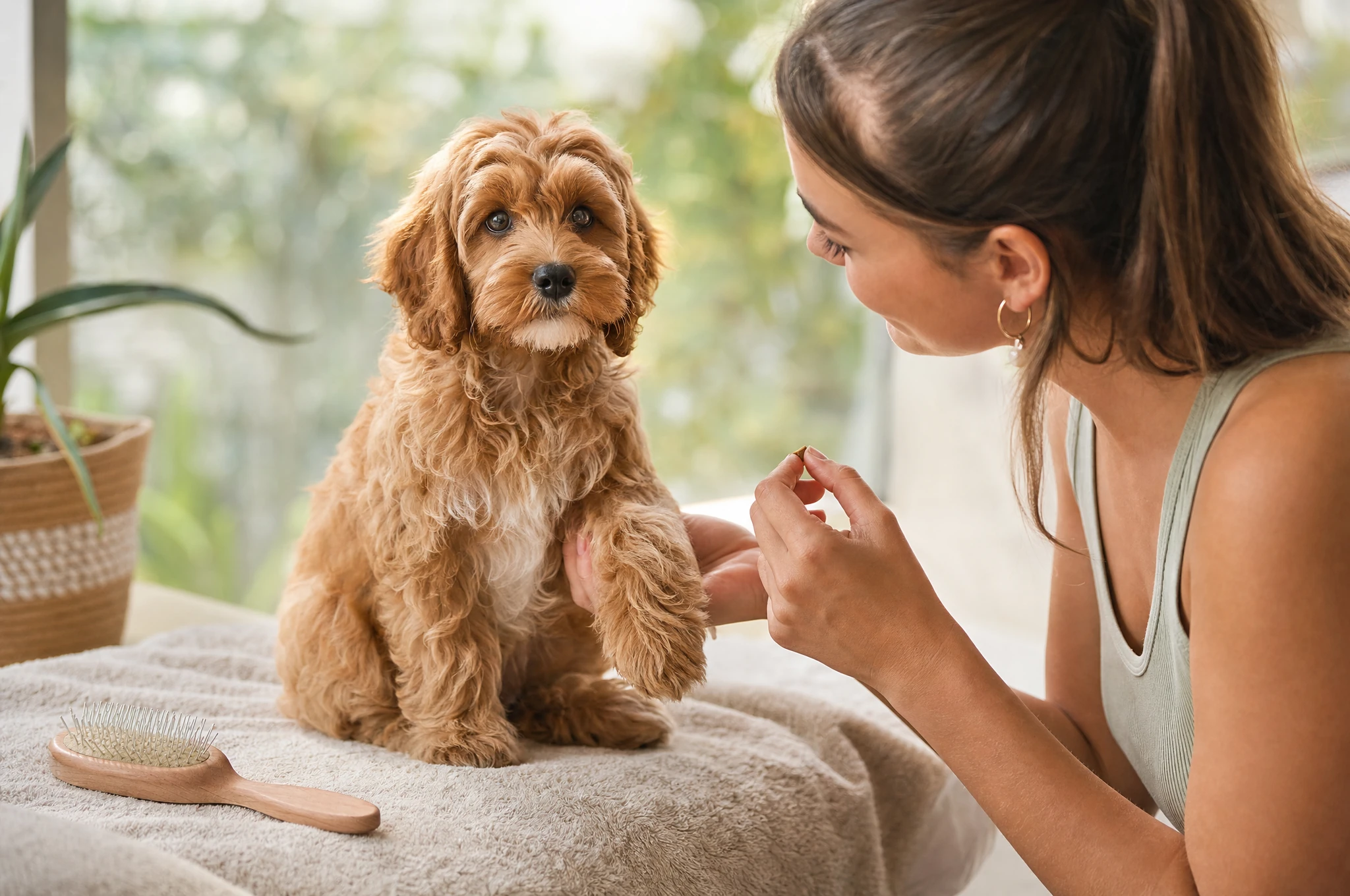
A first groom goes best when your dog already knows that being touched, brushed and dried is no big deal. Here’s how to get them there at home, and what to tell your groomer before you arrive.
Grooming means a stranger handling your dog’s paws, ears and face, often with noisy tools. The more your dog has practised with you, the easier it gets.
AVSAB describes the first three months of life as the most important time for puppy socialisation, and says puppies should learn to accept handling of all body parts. Older dogs can learn too, with more patience.
The San Francisco SPCA uses a simple pattern: touch gently, mark, treat. Work through each area of the body:
For each area, go from a light touch, to holding, to a little more pressure, to gentle restraint. Only move to the next level when your dog is completely comfortable with the current one. If a spot is sensitive, warm up with areas your dog likes, then work on the tricky spot in short bursts. If your dog seems really scared, stop. Do less and reward more often next time.
Cooperative care means teaching your dog to take part in handling rather than being held still. A consent cue lets your dog say “I’m ready” or “I need a break”.
The chin rest is a popular one. Fear Free trainer Mikkel Becker describes teaching a dog to rest their chin on a towel or cushion and hold it there while you handle them. A chin that stays down is the green light to carry on. A head that lifts means pause, adjust, and maybe stop.
That last step matters most. A dog who knows lifting their head works has less reason to struggle.
Two-week handling plan: Days 1 to 3, touch, mark and treat on the body and ears, three minutes a day. Days 4 to 7, add paws, mouth and a few brush strokes. Days 8 to 10, add holding each paw and touching nails with the clippers closed. Days 11 to 14, add the chin rest and short bursts of dryer or clipper sound from across the room. If your dog stops taking treats, go back a step.
Long nails are uncomfortable and can affect how your dog walks. The RSPCA advises trimming nails just before they start to touch the ground when your dog is standing or walking. If you can hear them clicking on hard floors, they’re probably due. Check dewclaws too, as they don’t wear down naturally.
How often depends on your dog. Texas A&M’s veterinary college suggests every six to eight weeks as good practice, adjusted for how active your dog is and the surfaces they walk on.
Inside each nail is the quick, which contains blood vessels and nerves. In pale nails it shows as a pink area. In dark nails you can’t see it, so trim tiny slivers at a time. Texas A&M also notes that if nails are left untrimmed, the quick can grow longer, which can cause pain when standing or walking and may injure a tendon.
If you do nick the quick, RSPCA Pet Insurance advises pressing a little styptic powder or cornflour onto the nail tip for a minute or two. Call your vet if the bleeding doesn’t stop.
Texas A&M suggests building up gradually: handle the feet, let your dog investigate the clippers, then trim with praise and treats.
Groomers use loud dryers and buzzing clippers. Veterinary behaviourists writing for VCA describe the method that helps here: desensitisation and counterconditioning. Start with the sound so quiet your dog barely reacts, pair it with treats, and only make it slightly harder after two or three relaxed sessions.
The VCA authors say a dog who stops taking treats is a sign you’re moving too fast. So are panting, trembling or trying to get away.
| Coat | Home care |
|---|---|
| Short coat | A short-bristled brush. |
| Long coat | A longer-bristled brush, often, to prevent matting. |
| Double coat | Daily brushing. Regular baths help loosen dead undercoat. |
The RSPCA notes that double-coated dogs need daily grooming to prevent matts and build-up of dead hair.
Thinking of shaving a double coat for summer? RSPCA Victoria advises against it. Dogs naturally shed their undercoat in summer, and an undercoat growing back after a shave can make a dog hotter. The top coat also protects against sunburn. Shaving can permanently change the coat, often losing its soft texture.
There’s also a chance the coat won’t grow back for a while. A University of Minnesota dermatology handbook describes post-clipping alopecia, where hair fails to regrow after close clipping. It’s seen more often in plush-coated breeds. Regrowth usually takes three to four months, but can take 12 to 24.
The exception is matting. The RSPCA says clipping can remove matts and recommends a reputable professional for the job. Ask your groomer about de-shedding first.
Keep the first visit short. A bath, brush and tidy-up is plenty. The RSPCA recommends starting grooming with short sessions and rewards, and that’s just as true at the salon.
A good groomer will let your dog sniff around first, use treats and take breaks. Ask them to call you if your dog is struggling, so you can pick them up early.
The RSPCA lists yawning, lip licking, a tucked tail, ears back, avoiding eye contact, turning the head away and a raised front paw among the signs a dog is uncomfortable. If your dog seems more worried each visit, slow down and go back to practising at home.
Ears. The PDSA lists head shaking, rubbing the head along the ground, itchy or painful ears, redness, swelling, heat and a smelly discharge as signs of an ear infection. A head tilt or loss of balance needs a vet the same day. Never use cotton buds in your dog’s ears.
Skin. Contact your vet if your dog is scratching or licking more than normal. The PDSA also lists bald patches, red skin or a rash, self-inflicted wounds, lick-stained fur and dark, thickened skin.
In PackDay: your dog’s passport keeps allergies, vet details and grooming notes in one place, so your groomer has them before you arrive.
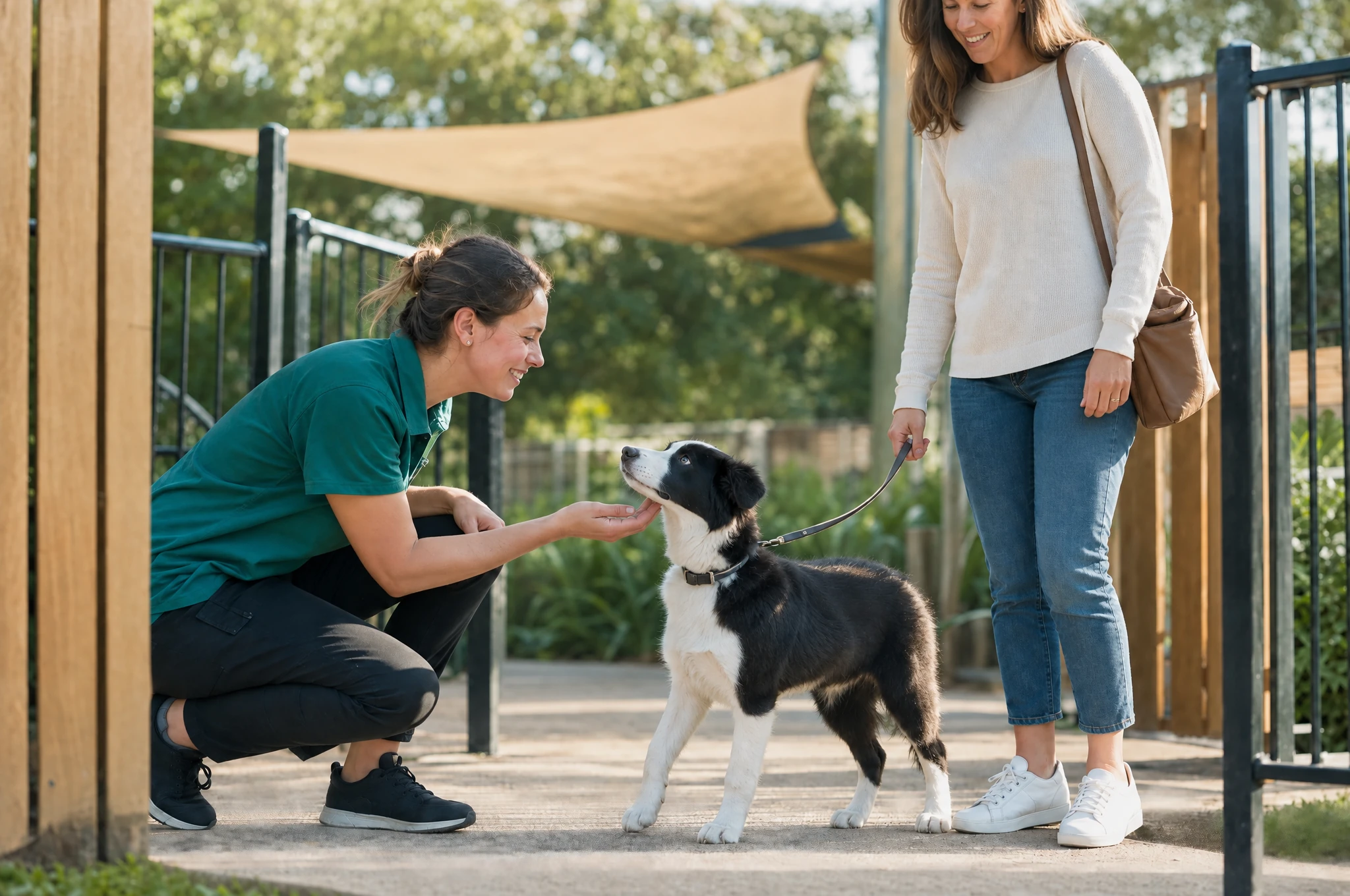
How to tell if daycare suits your dog, what to sort out before day one, and what a good first week looks like.
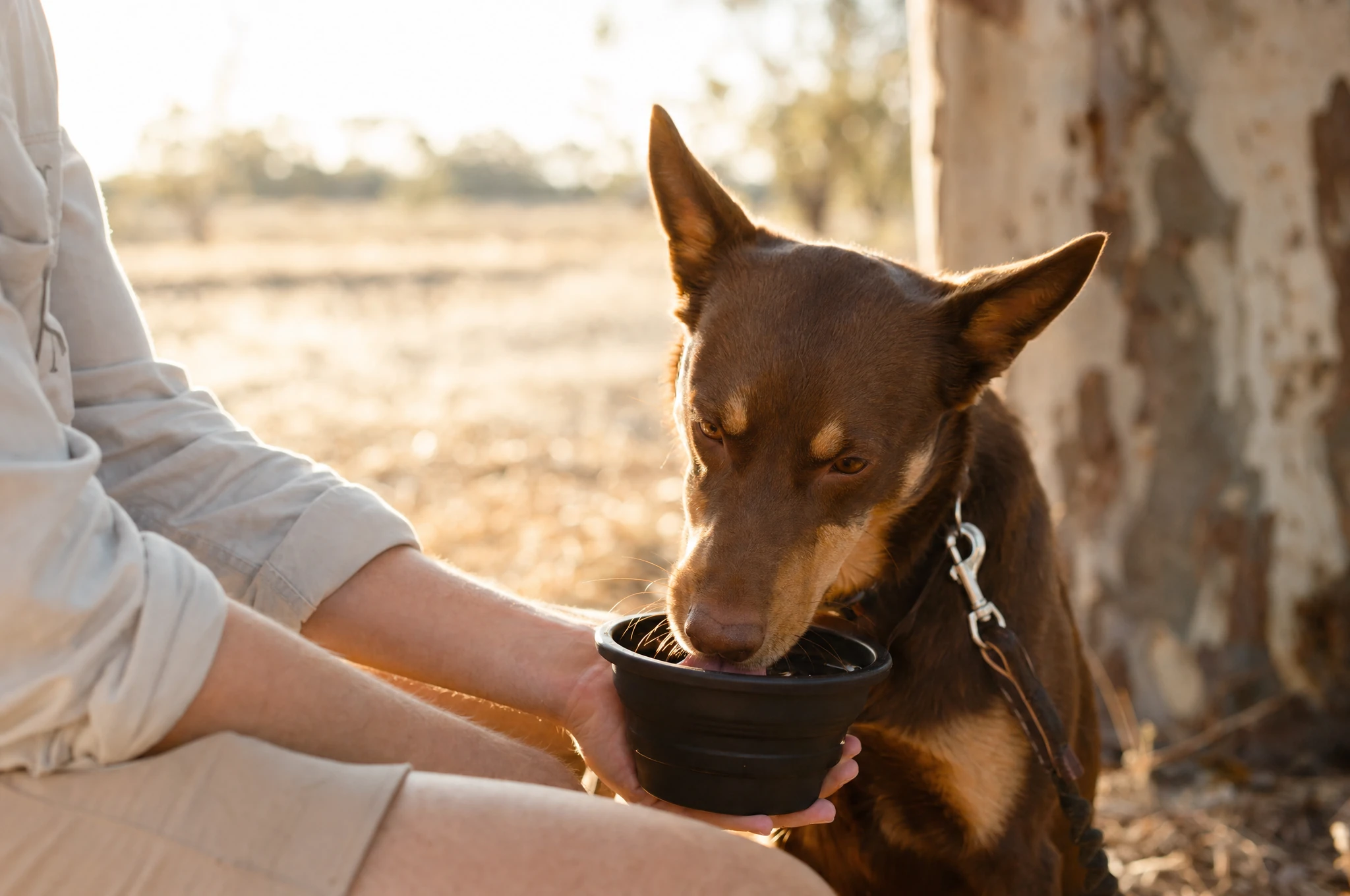
Heat, hot footpaths, snakes and fireworks: simple habits that keep dogs safe until the cooler weather comes back.
A 30-day free trial when PackDay opens, no card. No booking fees, ever.